Customer case study
Historic, Grade II* listed former Baptist chapel
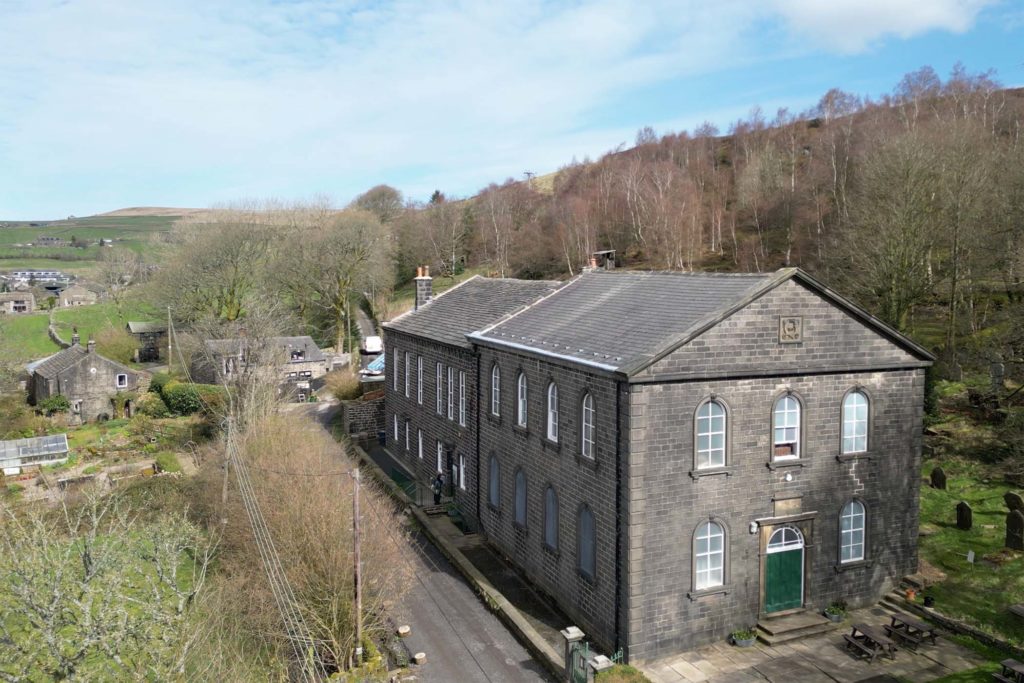
Wainsgate Chapel, built in 1859 in West Yorkshire, is a listed former Baptist church that now operates as a vibrant community arts and cultural centre.
The building hosts seasonal concerts, dance workshops, and school events – but it suffered from severe cold and damp that threatened its historic fabric and its original working organ.
The chapel’s trustees wanted to move away from fossil fuels and install a sustainable heating system to gently raise the ambient temperature of the space.
Due to the building’s protected listed status, the interior fabric could not be altered, meaning any new system had to integrate with an antique, one-pipe cast-iron heating circuit that hadn’t been used for anywhere up to 50 years.
After being turned away by several suppliers who deemed the heritage project too difficult, the committee contacted Halifax Renewables to design a highly efficient heat pump system that safely integrated with the historic pipework. This saved the charity roughly half of their expected budget.
A lot of people just didn’t want to go near a heritage building, because it’s difficult and challenging.
Andrea, Wainsgate Chapel
The goals
As custodians of a heritage building, the trustees were committed to environmental sustainability and strictly ruled out installing a new gas system, despite being advised by others that it might be cheaper to run.
Their primary goal was to provide a gentle, ambient heat to halt the deterioration of the building’s historic fabric, specifically the crumbling plasterwork around the windows which had thwarted previous repair attempts.
They also needed to stabilise the temperature and humidity to protect the chapel’s original working organ, a strict prerequisite before specialist restorers would consider taking on future repair work for the instrument.
Due to the strict Grade II* listed status, the new sustainable heat source had to somehow utilise the building’s existing, untested cast-iron pipework and radiators without altering the interior aesthetics.
The committee initially commissioned an M&E report from a consulting firm, which recommended a highly conservative, over-specified two-phase system that the charity could not fully afford.
Furthermore, other installers repeatedly ignored their contact or walked away from the job entirely, viewing the heritage constraints and unknown pipework as “too much of a risk to take on”.
Working together
Wainsgate Chapel reached out to Steve at Halifax Renewables, who quickly visited and put the committee at ease by explaining the technology in clear, accessible language.
Steve reviewed the expensive M&E report and immediately recognised that it was overkill, largely because standard residential heat-loss calculation methods massively overestimate the requirements of large church buildings.
Rather than guessing the required heat load, Steve proposed a scientific approach: running a real-world thermal response test over an entire season.
The chapel committee took a leap of faith, investing upfront to allow Halifax Renewables to trace, repair, and leak-test the decades-old cast-iron pipes to build a functional test rig.
By injecting a known quantity of heat into the chapel and monitoring the indoor temperature response against outside weather conditions, they gathered precise, empirical data.
The experiment proved that the building’s actual heat loss was only about a third of the consulting engineers’ original overly-conservative estimate.




Installation
Working closely with the local conservation officer, Halifax Renewables meticulously planned the installation to ensure the listed building fabric was respected, particularly when drilling required holes.
Armed with accurate thermal data, the team confidently designed a system that entirely eliminated the need for the expensive air-conditioning boost system that was proposed by the original M&E report.
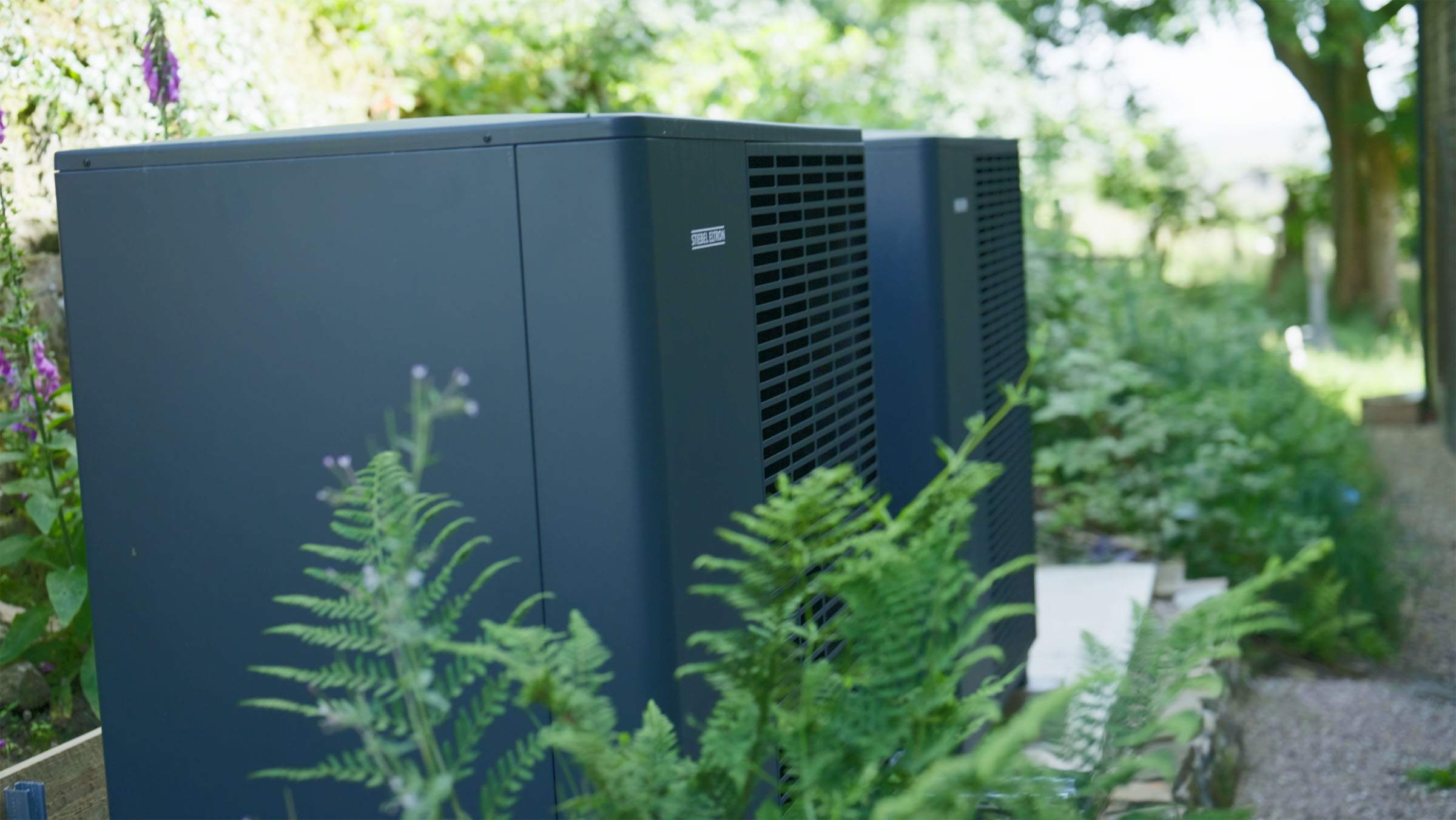
The heat pumps were discreetly installed in a very tight, restricted space on the edge of the graveyard behind the church, ensuring they remained completely out of view.
To directly combat the damp affecting the historic church organ, the team carefully routed some of the heating pipes directly through the inside of the instrument’s bellows.
Alongside the main chapel room, the new heat pump system was successfully extended to heat the attached Sunday school room, kitchen, and assembly halls.
The installation was neat, non-intrusive, and carefully respected the historical significance of the centuries-old architecture – whilst still delivering modern, meaningful performance.
It was a game changer for us. A real game changer. It meant that we could achieve the desired temperature with less money – and we didn’t have to go back and ask for more funds.
Andrea, Wainsgate Chapel
Customer feedback
The committee notes that the new heating system has completely transformed the chapel, turning a previously freezing, damp environment into a welcoming space for community events, school visits, and concerts.
The ambient temperature has successfully halted the decay of the building’s plasterwork, effectively safeguarding the chapel’s fabric and allowing the committee to confidently apply for further restoration funding.
The organ is now in a stabilised environment, fulfilling the strict climate requirements needed for its future professional restoration.
Because empirical testing proved the initial M&E report was vastly over-specified, the charity saved a massive portion of their budget – freeing up critical funds for other restoration projects within the building.
Key highlights from this project:
Do you have a project like Wainsgate Chapel?
Get a free quote
with us in minutes.
Informed decisions are good decisions.
With nearly two decades of industry experience, Halifax Renewables are well-placed to give you the solid advice and information you need.
Whatever project you have in mind, do it once, and do it right.
Other case studies...


THE BOILER UPGRADE SCHEME (BUS)
Take advantage.
Save thousands.
Until the end of 2027, the Boiler Upgrade Scheme (BUS) supports the decarbonisation of homes, as well as small and medium non-domestic buildings, in England and Wales, with upfront grants of £7,500 available.