Customer case study
A modern public leisure & sports facility

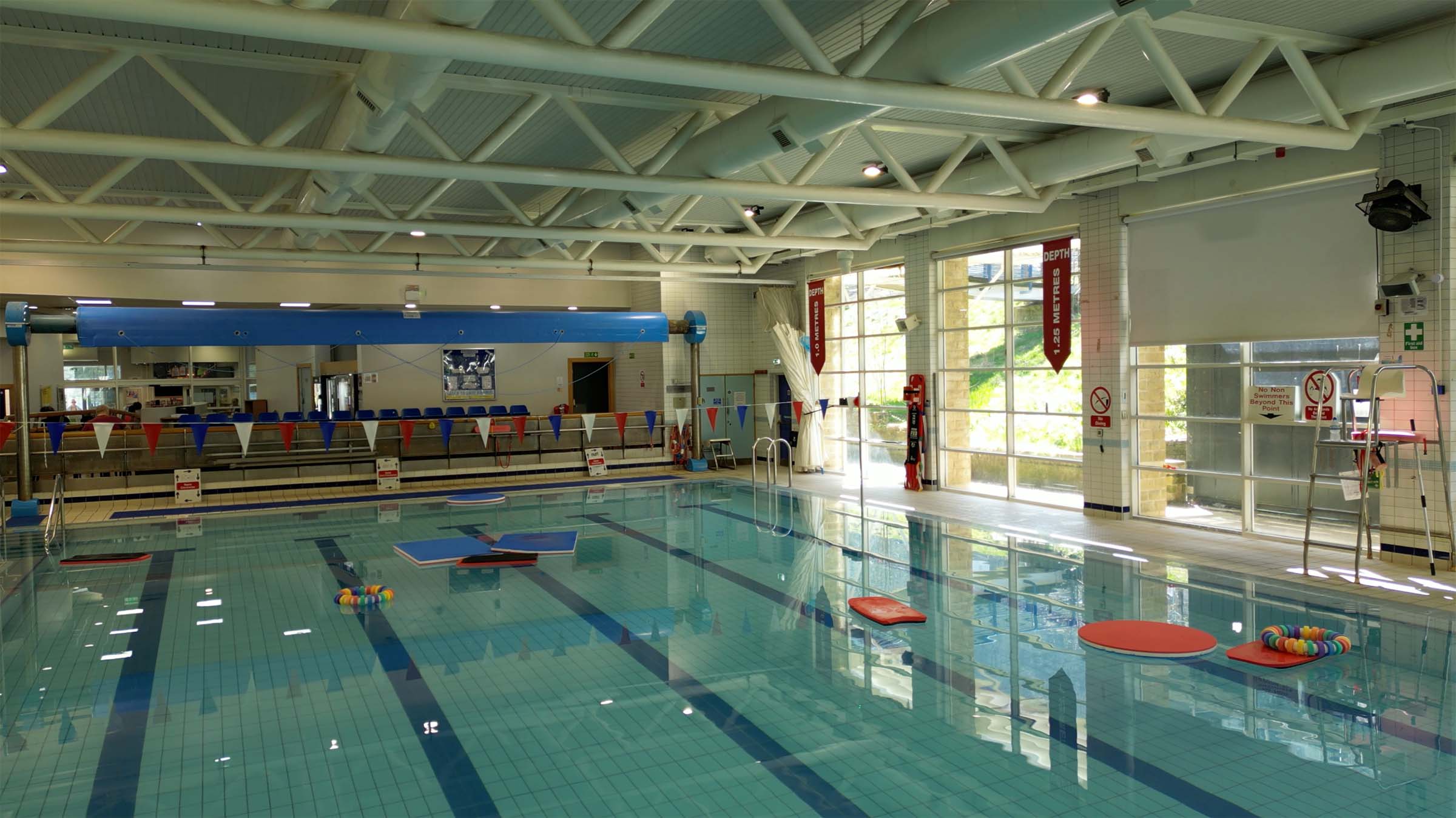
Todmorden Sports Centre is an approximately 30-year-old community hub featuring a swimming pool, sports halls, gym, and a spa suite.
Historically, the building relied on a massive gas heating and power setup to maintain the high temperatures required for the pool and ambient environment.
Sports and leisure centres across the country are notoriously difficult to decarbonise, with high heating requirements and rising running costs threatening the closure of many public facilities.
Halifax Renewables designed a bespoke, data-driven solution replacing the fossil-fuel system with a highly efficient commercial heat pump cascade and thermal storage system, completely eliminating the building’s reliance on gas.
We didn’t just take out the boilers and replace them with equivalent sized heat pumps – we carefully analysed the building.
Steve, Halifax Renewables
The goals
The core objective was to decarbonise the high-demand facility to reduce emissions and lower running costs, thereby safeguarding the community asset for the future.
The facility required significant heat generation to maintain the swimming pool at roughly 30 degrees Celsius, alongside keeping the pool hall atmosphere warm enough to prevent condensation and ensure comfort for swimmers.
Additionally, the system needed to provide substantial hot water for the changing room showers across both the wet and dry sides of the centre.
A major pitfall in similar commercial decarbonisation projects is over-specification, where replacement systems are oversized without due attention to heating system efficiency.
To avoid this, Halifax Renewables relied on empirical data, revealing the actual peak load for the building was significantly less than the original gas installation’s specified output.
The site’s proximity to a highway and neighbouring residential homes also meant that new external equipment had to meet strict noise limits.
Working together
Halifax Renewables collaborated closely with Calderdale Council on this design-and-build contract, ensuring the system was perfectly tailored to the building’s empirical data rather than relying on guesswork.
They agreed on a precisely scaled solution, providing both the necessary heat-up ability and vital redundancy for ongoing maintenance without interrupting the building’s day-to-day operations.
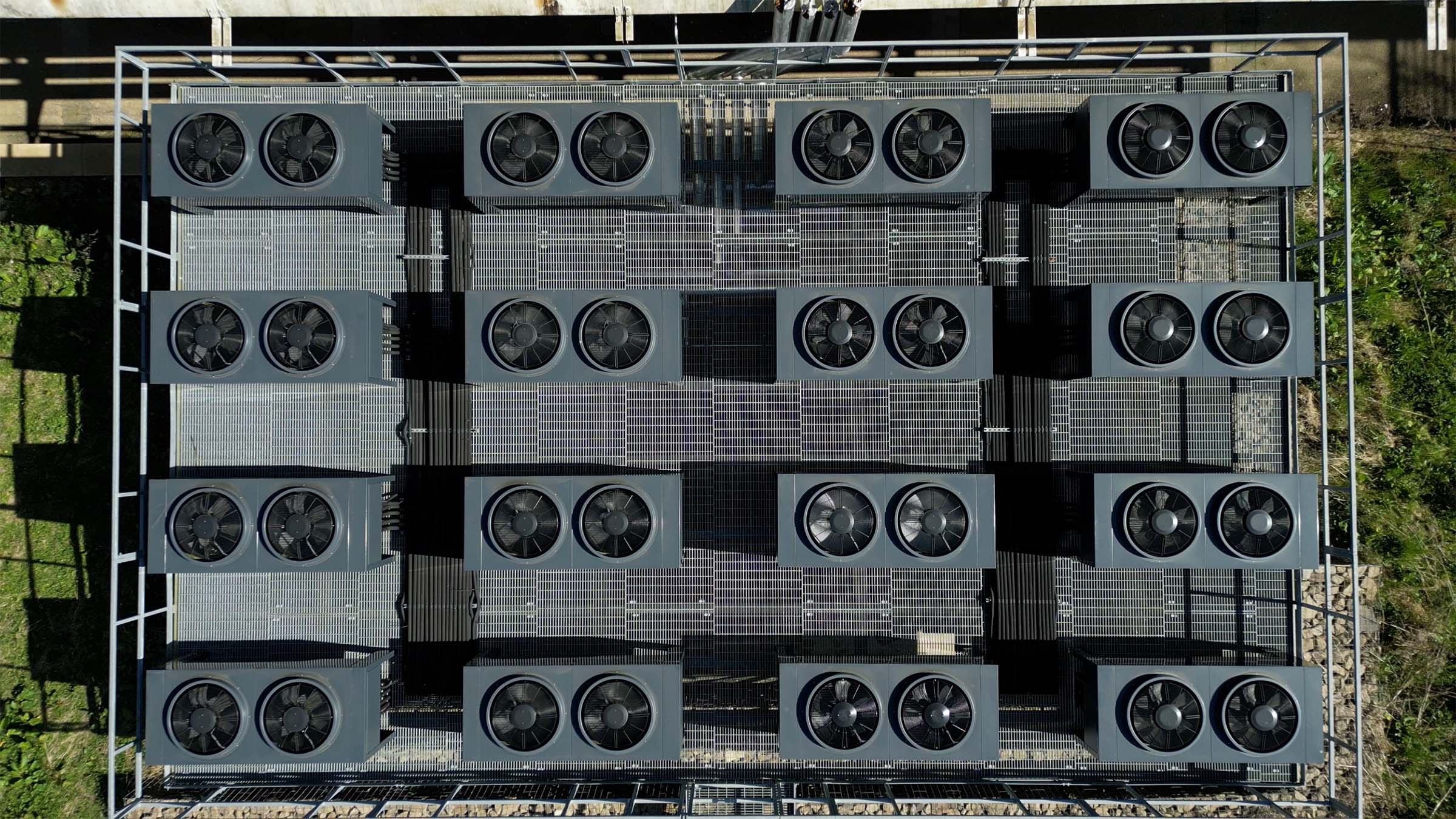
The Halifax Renewables team partnered with Ochsner, an Austrian company with 150 years of experience, selecting an array of 16 Ochsner Air 41 split-machine heat pumps.
These specific units were chosen because their external components only house the moving fans, operating so quietly that the project met strict planning noise limits without requiring acoustic barriers or fencing.
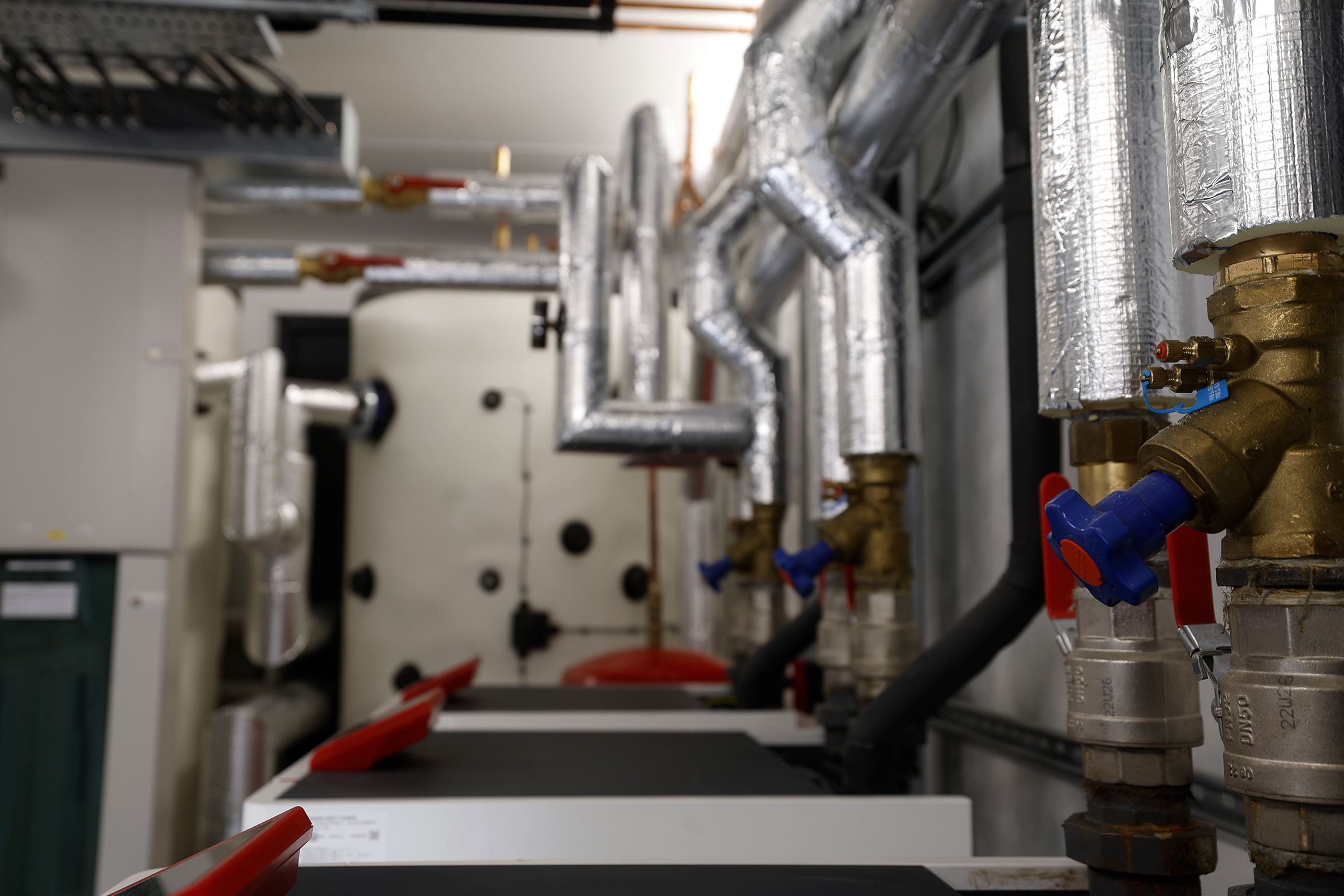
To mitigate Legionnaire’s disease risks, the engineers integrated a specific thermal store approach for hot water, ensuring the stored hot water is kept completely separate from the water delivered to the showers.
A massive 3,000-litre buffer tank was installed to interface with the building’s existing distribution systems, allowing the existing underfloor heating and air handling units to operate seamlessly with the newly weather-compensated water.
Installation
The physical installation required significant engineering and civil work, including constructing special external plant rooms for the 16 heat pumps, which were arranged in four cascades.
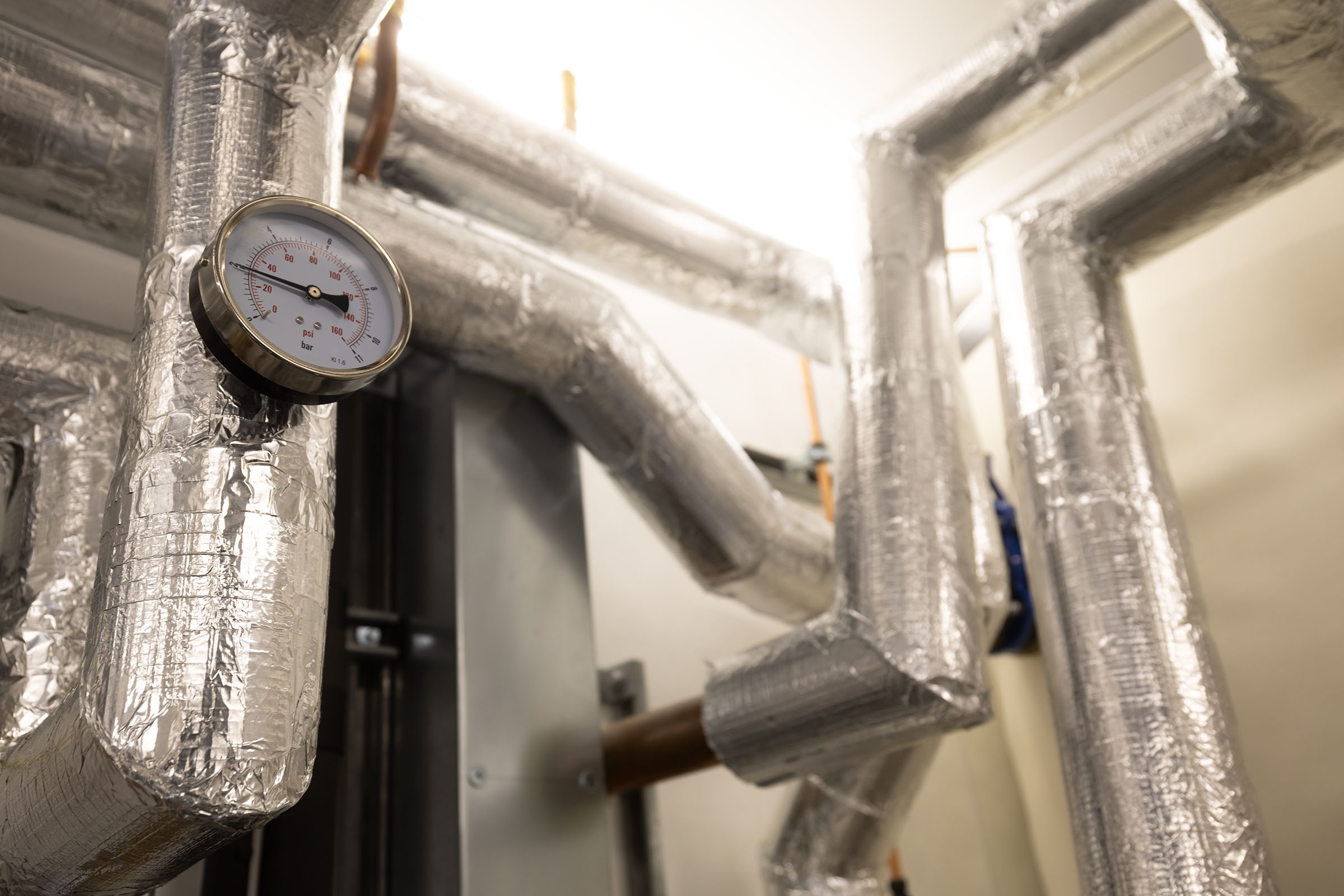
Connecting the external plant to the internal swimming pool buffer tank required running high-volume copper primary circuits over 50 metres around the building.
By specifying exceptionally thick and high quality insulation for these pipe runs, Halifax Renewables achieved an astonishingly minor heat loss of just 0.15 degrees Celsius between the outdoor plant room and the indoor tank.
The team utilised temporary boilers to take over the heating load while the old gas units were removed, restricting total downtime to barely more than a day during the final changeover.
Halifax Renewables coordinated their work alongside two other contractors who were upgrading the pool’s filtration and installing a rooftop solar PV array, combining resources to minimise disruption for the centre.
Even unexpected logistical hurdles, such as a last-minute restriction on moving a large crane down the access road, were swiftly resolved through flexible redesigns and a smaller alternative crane lift.
It’s run throughout the winter with no major issues and no downtime. We’re not regretting switching the gas off.
Steve, Halifax Renewables
Customer feedback
The project successfully transformed the 30-year-old facility into a fully decarbonised operation.
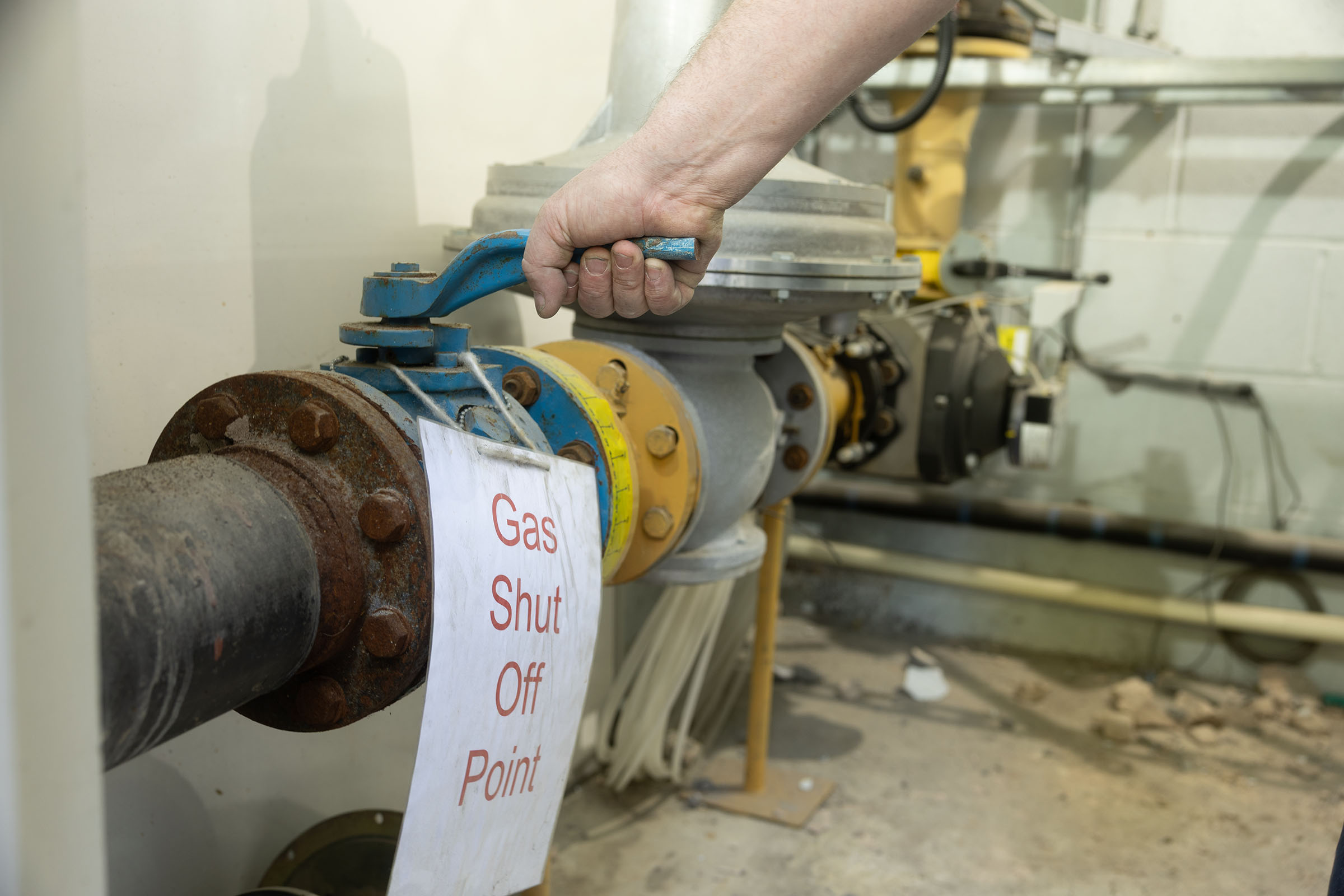
The building’s gas supply was entirely disconnected, permanently removing fossil fuels from the site and significantly reducing the council’s carbon dioxide emissions.
The new heat pump array works in perfect synergy with the newly installed solar PV array. Because the demand for hot water continues through the summer, the solar energy directly powers the heat pumps, creating an ideal decarbonisation loop.
Beyond the environmental success, the project delivered an immense boost to the local Calderdale economy.
By utilising a local specialist and local suppliers, the central government funding stayed within the community, simultaneously reducing travel emissions and allowing Halifax Renewables to create new permanent staff and apprentice positions.
Key highlights from this project:
Do you have a project like Calderdale Council?
Get a free quote
with us in minutes.
Informed decisions are good decisions.
With nearly two decades of industry experience, Halifax Renewables are well-placed to give you the solid advice and information you need.
Whatever project you have in mind, do it once, and do it right.
Other case studies...


THE BOILER UPGRADE SCHEME (BUS)
Take advantage.
Save thousands.
Until the end of 2027, the Boiler Upgrade Scheme (BUS) supports the decarbonisation of homes, as well as small and medium non-domestic buildings, in England and Wales, with upfront grants of £7,500 available.